
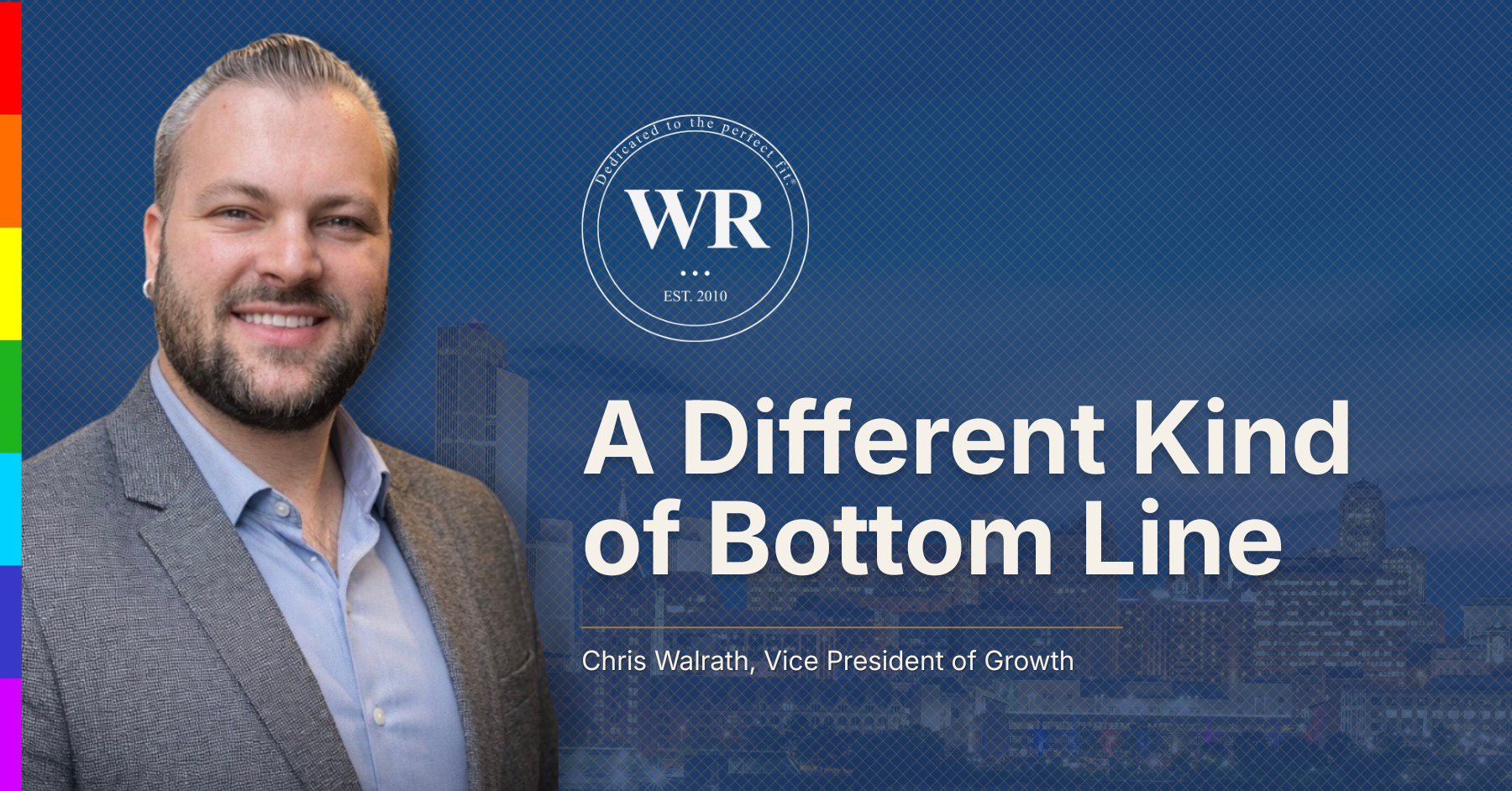
June is Pride Month, and for me, it’s a moment to reflect on what it means to build a culture of inclusion. Not just a policy on a wall or a checkbox during onboarding, but a real, day-to-day environment where every person on your team feels like they belong.
We all have different backgrounds and beliefs. We all see the world through different lenses, and that’s not a problem to manage, it’s a strength to leverage. But underneath those differences, I believe we are all working toward the same goals: to live our truth, show up authentically, and build a life we’re proud of.
The Numbers Are Hard to Ignore
I’m a relationship-first person, but I also respect data. And the data on inclusive workplaces is clear.
A 2025 retention study found that 97% of LGBTQ+ employees who reported positive inclusion experiences planned to stay with their organization for another year, compared to just 38% of those with negative experiences. That’s not a small gap. That’s the difference between a stable, high-performing team and a revolving door.
Meanwhile, McKinsey research consistently shows that companies in the top quartile for ethnic diversity are 36% more likely to outperform their peers on profitability, and gender-diverse teams post 25% higher returns. According to IMD’s 2026 Workplace Trends report, organizations with robust inclusion practices are 2.7 times more likely to report high success rates when competing for new business, and 2.4 times more likely to cite employee satisfaction as a competitive advantage.
The business case has never been stronger. But it isn’t what motivates me.
What Belonging Actually Costs When It’s Missing
The Human Rights Campaign’s 2026 Corporate Equality Index tells us that 26% of LGBTQ+ workers have actively searched for a new job because their environment wasn’t affirming, and 28% have already left a job for the same reason. That’s more than a quarter of a workforce segment walking out the door because they didn’t feel safe being themselves.
Research from Ennova puts an even finer point on it: among employees who score low on inclusion, 70% also report low intent to stay. Replacing a single employee can cost between 1.5 to 2 times their annual salary. When those employees belong to underrepresented groups, the cost expands. You don’t just lose the person, you lose perspective, institutional knowledge, and sometimes team morale along with them.
Belonging isn’t a perk. It’s a productivity driver.
What Inclusion Looks Like in Practice
It starts with leadership visibility. When LGBTQ+ employees see themselves represented in leadership, engagement increases 2.1x and employees are 1.8x as likely to recommend their workplace, according to research from Perceptyx. Visibility from the top signals safety throughout the organization. People watch what their leaders do, not just what policy documents say.
It requires honest policy and consistent follow-through. Clear, enforced anti-discrimination policies matter. But policies alone aren’t enough. The culture must back them up. A great policy that nobody enforces is worse than nothing, it signals that the words are performative.
It’s built through trust over time. The Edelman 2026 Trust Barometer found that employees who trust their employer are significantly more likely to stay engaged, productive, and committed. Trust isn’t built in a single gesture, it’s accumulated through repeated, consistent experiences of being treated with fairness and respect.
None of this requires perfection. It requires intention.
Where We Are Now
The landscape around DEI has been noisy in recent years. A lot of companies have pulled back publicly, not necessarily because their values have changed, but because the pressure to stay quiet got loud. I understand this complexity.
SocialTalent’s 2026 workplace trends research puts it plainly: in an environment where skills shortages are growing and top talent is demanding equity; diverse and inclusive workplaces aren’t a trend, they’re the answer. Turning away from inclusion doesn’t reduce risk. It increases it.
Research from Catalyst finds that 83% of C-suite leaders and 88% of legal leaders believe organizations should retain or expand their DEI programs, noting that reducing or eliminating them creates additional legal risk, including increased exposure to litigation. The organizations doing this work thoughtfully aren’t just being good citizens. They’re smart operators.
The Part That Matters Most
At the end of the day, I believe people are more alike than they are different. Across backgrounds, belief systems, and lived experiences, people want to feel respected. They want to do meaningful work. They want to be seen for who they are, not who they pretend to be to keep the peace.
That’s not a political statement. That’s humanity.
Pride Month is a reminder. Not just for companies to hang a banner or change a logo, but to ask the harder question: Do the people on our teams feel like they belong here?
Not just tolerated. Not just accommodated. But genuinely welcome.
If the answer is yes, that’s worth celebrating.
If the answer is “I’m not sure,” that’s where the real work starts.
Chris Walrath
VP of Growth, Walrath Recruiting, Inc.